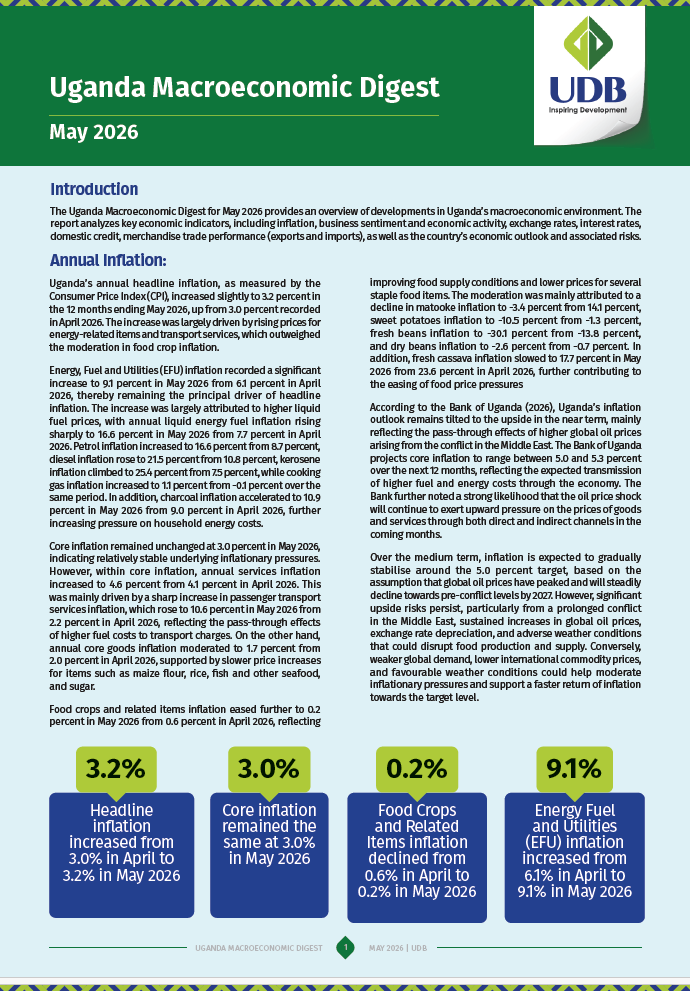
The Uganda Macroeconomic Digest for May 2026 provides an overview of recent developments in Uganda’s macroeconomic environment. It examines inflation, business sentiment and economic activity, exchange rate movements, interest rates, domestic credit, merchandise trade, and the country’s economic outlook and associated risks.
The May 2026 edition of the Uganda Macroeconomic Digest reviews key macroeconomic developments affecting the Ugandan economy amid heightened global geopolitical uncertainty and rising energy prices. The report highlights a moderate increase in headline inflation, driven mainly by higher fuel, energy and transport costs, while underlying core inflation remained relatively stable.
The digest also examines business confidence and economic activity, exchange-rate movements, monetary and lending conditions, domestic credit, and merchandise trade. It notes improved business sentiment and continued resilience in private sector activity, alongside depreciation pressures on the Uganda Shilling and a widening trade deficit.
The report further analyses Uganda’s trade performance within the East African Community, developments in selected agricultural exports and private sector imports, and the country’s medium-term economic outlook. While growth prospects remain favourable, the report identifies downside risks related to geopolitical tensions, higher global oil prices, exchange-rate pressures, supply chain disruptions and potential delays in strategic investments.