
2025 Joint Summary Report on Multilateral Development Banks’ Climate Finance
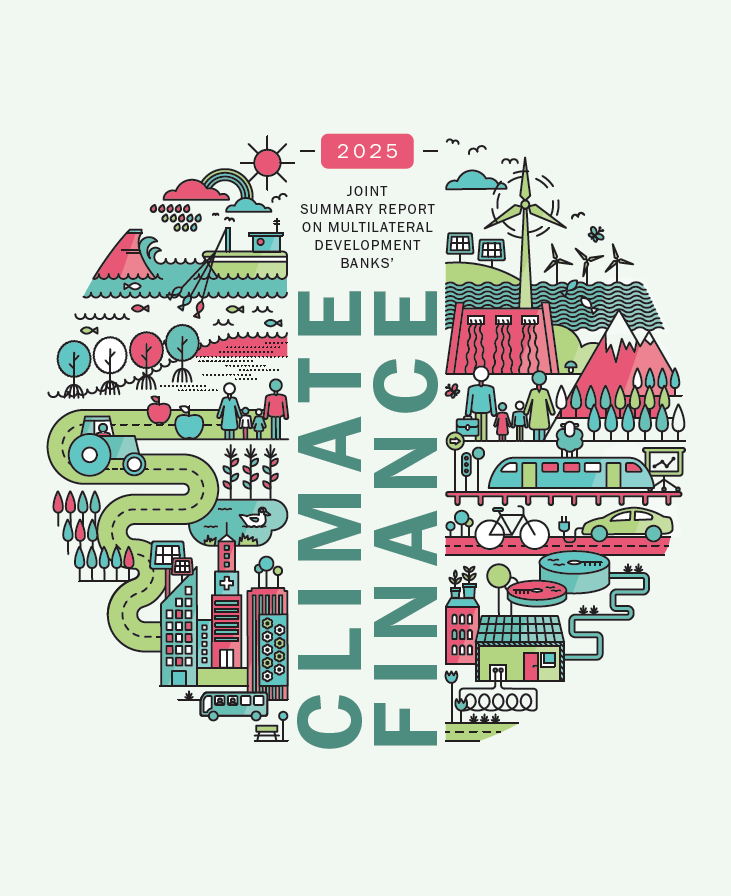
This joint report provides a consolidated overview of climate finance committed by major multilateral development banks in 2025. It presents key figures on mitigation and adaptation finance, regional distribution, financial instruments, co-financing and private capital mobilisation across low-, middle- and high-income economies.
Guideline Handbook for Strengthening African DFIs for Climate-Resilient Development
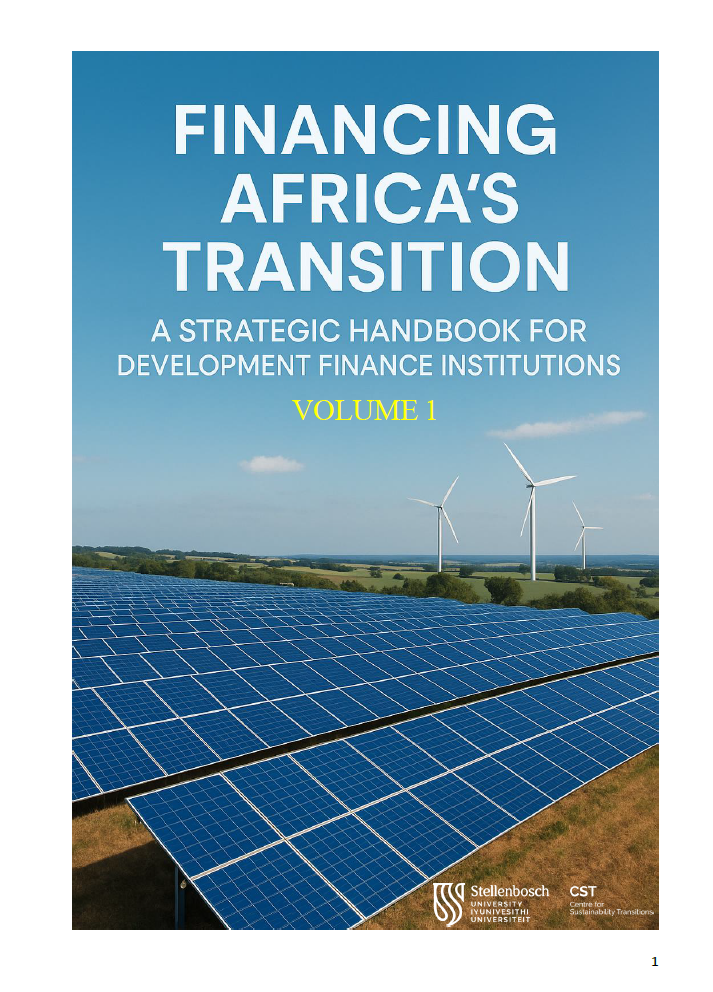
The Guideline Handbook for Strengthening African DFIs for Climate-Resilient Development provides a practical framework to help African development finance institutions (DFIs) enhance their capacity to mobilize and deploy climate finance. It examines the evolution, mandates, and institutional challenges of African DFIs and presents actionable guidance on governance, financial readiness, project preparation, ESG integration, human capital, digital monitoring systems, and investment readiness. Through case studies and practical tools, the handbook identifies best practices for strengthening institutional resilience, improving access to concessional and blended finance, and aligning operations with national climate priorities, the Paris Agreement, and the Sustainable Development Goals (SDGs).
Principles for Taxonomy Interoperability
The Principles for Taxonomy Interoperability, launched by the Taxonomy Roadmap Initiative at a Pre-COP30 event in São Paulo, guide policymakers in developing sustainable finance taxonomies that are credible and comparable across borders. As over 50 taxonomies exist globally, interoperability is essential to facilitate cross-border investment and efficient capital allocation. The Principles provide common tenets for taxonomy design, governance, and implementation, enabling greater transparency and investor confidence. By fostering alignment between emerging and developed markets, interoperable taxonomies can mobilize the climate finance needed to achieve decarbonization, resilience, and the Paris Agreement goals.
Summary Report of the 2025 Annual Workshop
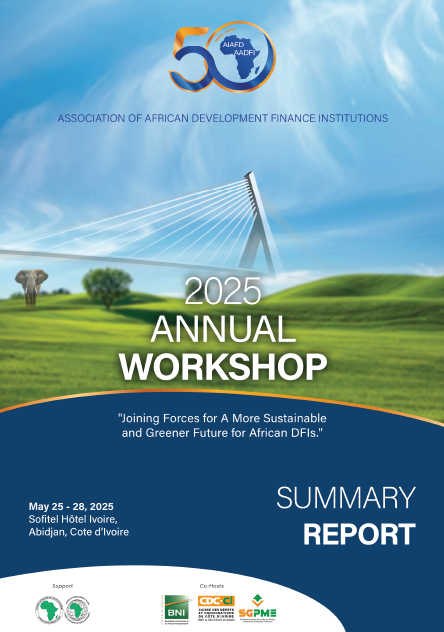
The 2025 Annual Workshop of the Association of African Development Finance Institutions (AADFI), held in Abidjan, Côte d’Ivoire, celebrated AADFI’s 50th Anniversary under the theme “Joining Forces for a More Sustainable and Greener Future for African DFIs.” Hosted by BNI, CDC-CI, and SGPME, and supported by the African Development Bank (AfDB), the event gathered over 250 participants from 36 countries, including senior representatives of DFIs, MDBs, and central banks. Discussions focused on scaling up sustainable investments, innovative financing, and partnerships for climate action. The opening ceremony featured addresses from the AfDB and the Ivorian Ministry of Economy and Finance, reaffirming DFIs’ strategic role in advancing Africa’s sustainable development agenda.
Financing for development from the perspective of public financial institutions

This study prepared by ALIDE, in collaboration with various institutions, presents a comprehensive diagnosis of the challenges, opportunities and new priorities of development finance institutions (DFIs) in Latin America and the Caribbean in a changing and complex environment. Based on two surveys conducted between 2023 and 2024, the document analyzes the strategies, capacities and key areas on which DFIs should focus to strengthen their role in promoting sustainable economic development and climate transition in the region.
Road to comprehensive security: Development banking forging the future of Latin America

This document analyzes how the multiple global crises -such as pandemics, climate change, geopolitical tensions and digital transformation- have revealed systemic vulnerabilities that require a new comprehensive security approach that goes beyond the military, encompassing climate, economic, energy, digital, social and labor dimensions. Nine chapters examine these sectoral areas and their impact on Latin America and the Caribbean.
NAVIGATING GREEN PUBLIC FINANCIAL MANAGEMENT: A REFERENCE GUIDE FOR MINISTRY OF FINANCE OFFICIALS

This Green Public Financial Management (GPFM) Toolkit, developed by GIZ and co-financed by the EU and BMZ, supports Ministries of Finance and policymakers in integrating environmental priorities into fiscal systems. Featuring 72 global resources, it guides reform assessment, implementation, and capacity-building. The toolkit emphasizes thematic and geographic diversity, offering practical tools for sustainable finance and climate-resilient development, especially in Global South contexts.
Mapping AADFI Member State of Readiness to Access Climate Finance

The study assesses the readiness of African Development Finance Institutions (DFIs) to access climate finance. It examines their commitment to the energy transition, challenges in implementing green financing, and the support needed in capacity building and technical assistance. It highlights regulatory barriers, lack of expertise, and limited funding access, recommending capacity strengthening and streamlined accreditation processes.
El financiamiento climático en América latina y el Caribe ¿Cómo son públicas, los bancos de desarrollo apoyar la transición del clima?

Este documento comienza por ofrecer una visión general de los riesgos del clima en América latina y el Caribe, utilizando el BEI país de clima calificaciones de riesgo. Esta introducción es seguida por una evaluación de la región de inversión en el clima de las necesidades y las posibles fuentes de financiación, en la actual macroeconómicas y fiscales contexto. El papel de los bancos de desarrollo en la región, su contribución al riesgo climático y mitigación de los resultados de la encuesta realizada se describen. La última sección presenta las principales conclusiones y recomendaciones de política.
La estimación de las Necesidades de Inversión en el Sector de la Energía en África 2023-2030 – Informe de Africa

Este estudio es una contribución al debate en curso sobre los costos y las implicaciones de abordar los dos principios fundamentales de la energía desafíos que enfrenta el continente Africano, es decir, lograr el acceso universal a la electricidad en consonancia con el Desarrollo Sostenible del Objetivo número 7 y la expansión de sistemas de energía para apoyar el crecimiento económico, sin encerrarse en un alto de las emisiones de la vía.